For Marketing & RevOps
Give every growth team one auditable customer and revenue view.
Connect first-party website events, Shopify customers and orders, ad platforms, analytics, and lifecycle tools around consistent definitions, then use the same customer state for reporting, audiences, and server-side signals.Traceable event definitionsCustomer + revenue measurementControlled destinations

Connected customer state
Join website behavior to the customers and revenue behind it.
- Connect anonymous sessions to known customers when evidence becomes available
- Use Shopify orders and refunds as the customer and revenue foundation
- Preserve source, campaign, click-ID, and continuation-journey evidence
Consistent definitions
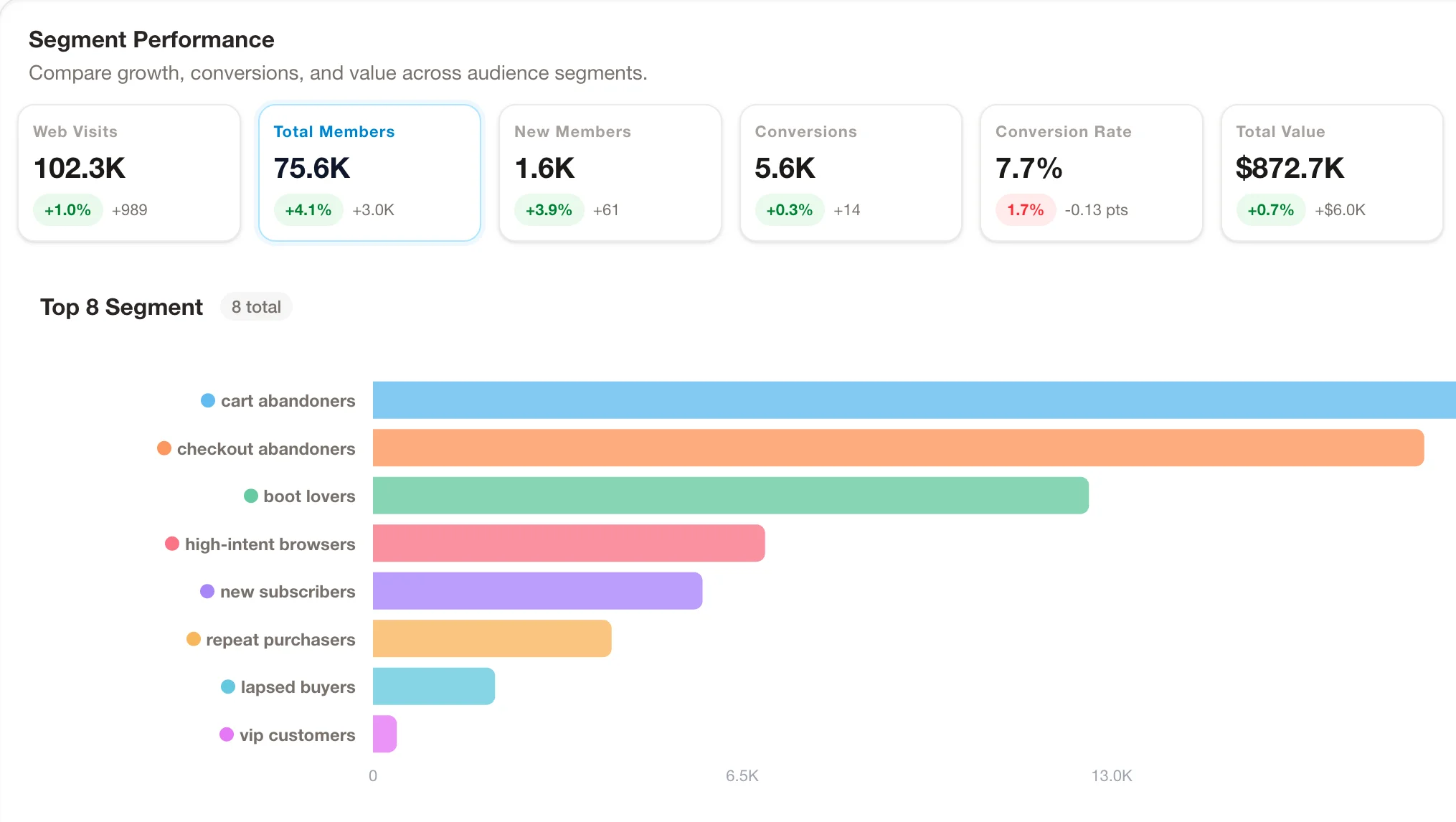
Define the customer states every downstream team can use.
- Documentable rules based on behavior, customer status, orders, and value
- Membership reevaluates as new events and outcomes arrive
- One definition can be checked before it reaches paid or lifecycle tools
Governed activation
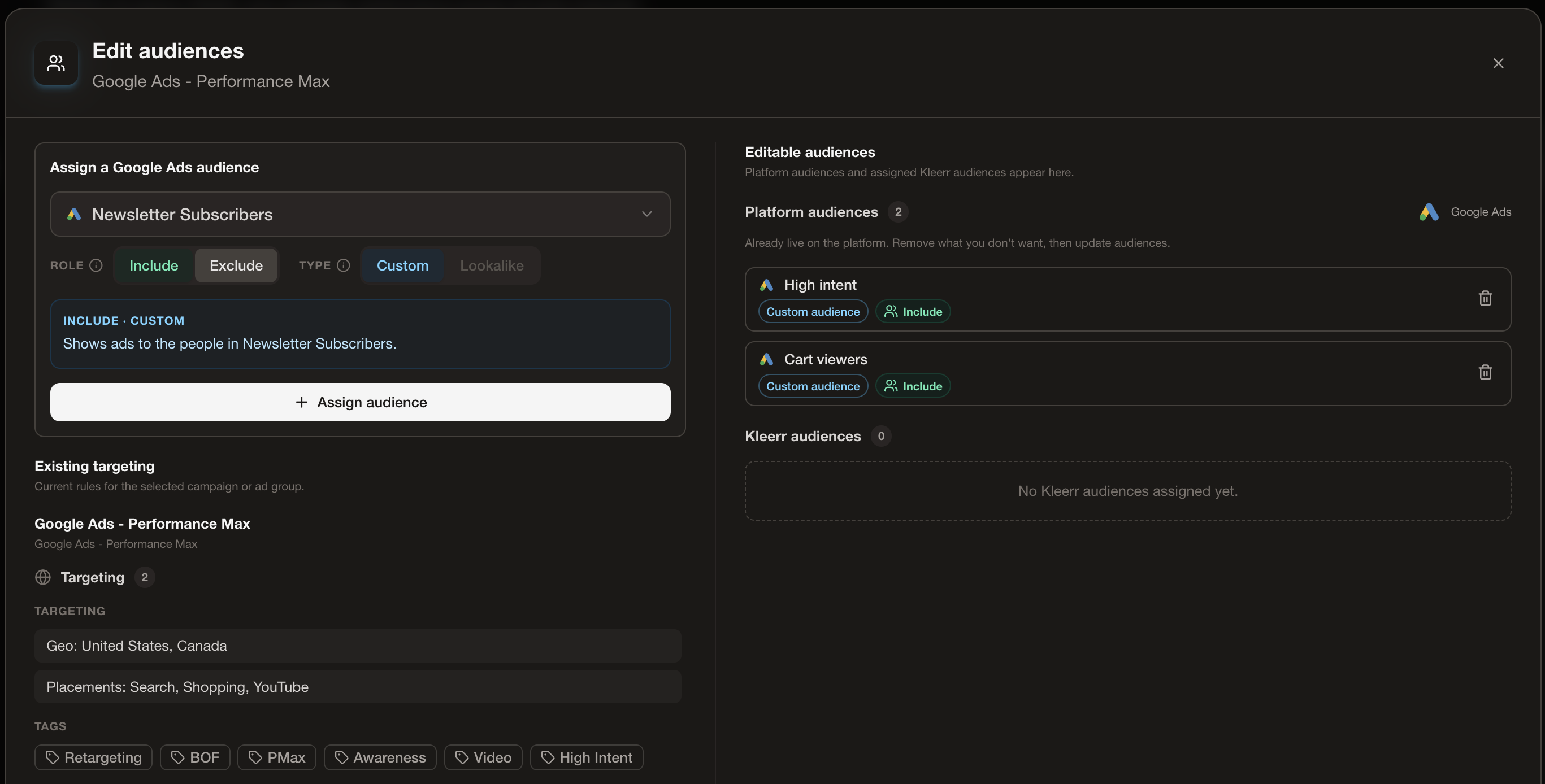
Control what customer data becomes an audience or conversion signal.
- Assign segments as inclusions, exclusions, retargeting, or lookalike seeds
- Send eligible conversion and value signals to connected destinations
- Keep destination actions separate from the independent revenue record
Operational jobs
A shared system for the work between analytics and execution.
Standardize customer definitions.
Give paid media, lifecycle, analytics, and leadership the same meaning for new, repeat, recent, and high-value customers.
Debug the data path.
Trace a questionable result from campaign claim to session evidence, customer, order, refund, and destination.
Operationalize the next action.
Turn approved customer states into current audiences and server-side signals without another manual export.
FAQ
Questions Marketing and RevOps teams usually ask
Which system is the revenue source of truth?
For ecommerce measurement, Kleerr starts with the Shopify order ledger and reconciles refunds. Ad platforms, analytics, and lifecycle tools contribute source and engagement context but do not replace the order record.
How does identity resolution work?
Kleerr preserves first-party visitor, session, source, and click-ID context, then connects activity to a known customer when deterministic identifiers or confirmed business outcomes become available.
Can reporting and activation use the same segment definition?
Yes. A reviewed customer state can be measured in Kleerr and used to maintain an audience or determine whether an eligible signal should be sent to a connected destination.
How do we avoid double-counting server-side events?
Kleerr separates destination optimization from independent measurement. Connected ad platforms may each receive an eligible event, while Kleerr keeps its own cross-channel reporting deduplicated against the underlying customer and outcome.
Does Kleerr replace our warehouse, CDP, or lifecycle platform?
Not by default. Kleerr provides a managed first-party measurement and activation layer for growth teams. It can work with the analytics, advertising, CRM, email, SMS, and data tools already in your stack.
Give every growth decision a traceable customer and revenue record.
Connect the systems your teams already use, standardize the customer states that matter, and review how those definitions become reporting, audiences, and server-side signals.