Updated July 11, 2026.
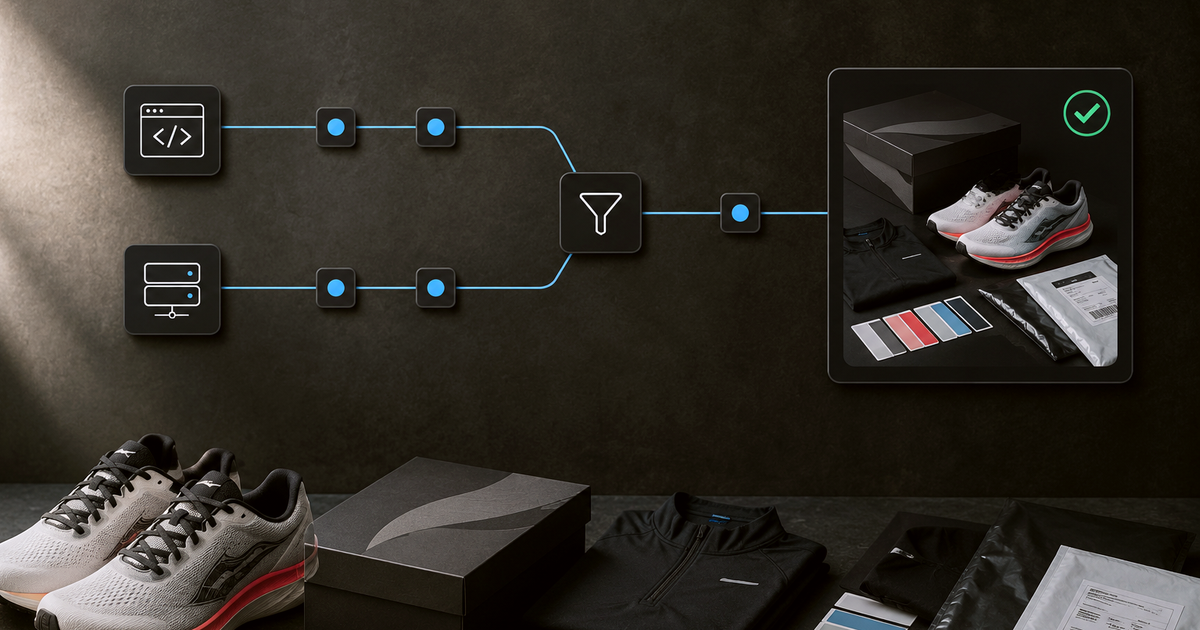
Pixel vs CAPI deduplication is the process Meta documents for avoiding duplicate conversion counts when the browser Pixel and Conversions API both send the same customer action. For Shopify brands, getting it right protects Meta reporting from duplicate events. It does not prove which channel actually created the order.
TL;DR
> - Pixel sends browser events. CAPI sends server events. Deduplication tells Meta when both describe the same action.
> - Meta deduplicates browser and server events using the same `event_name` and `event_id`.
> - Deduplication fixes duplicate event counting inside Meta. It does not reconcile Meta ROAS against Shopify revenue.
> - Shopify teams should QA dedup, then audit platform-reported revenue against real orders before moving budget.

What is pixel vs CAPI deduplication?
Pixel vs CAPI deduplication stops Meta from counting one conversion twice when the same action is sent from both the browser and the server. A clean setup sends one shared event ID with the browser Pixel event and the matching Conversions API event, so Meta can collapse them into one counted action.
Meta Pixel is browser-side tracking. It fires from the shopper's browser when a page loads, a cart is created, or a purchase happens.
Conversions API, often called CAPI, is server-side tracking. It sends event data from your server, ecommerce platform, or tracking provider to Meta. Meta describes Conversions API as a way to send marketing data directly from a server connection to Meta systems in its Conversions API documentation.
Deduplication is the bridge between them.
If the Pixel and CAPI both report the same purchase, Meta needs a way to know they are one event, not two. That is why the `event_id` matters.
How does Meta deduplicate Pixel and CAPI events?
Meta deduplicates matching browser and server events when both versions share the same event name and event ID. For Shopify teams, the practical rule is simple: if Pixel and CAPI describe the same purchase, they should use the same `event_name` and the same unique `event_id`.
For browser and server events, Meta says deduplication uses the same `event_name` and `event_id` across both versions of the event, according to its deduplication documentation.
For a Shopify purchase, the setup should look like this:
| Field | Browser Pixel event | CAPI server event | Why it matters |
|---|---|---|---|
event_name | Purchase | Purchase | Meta needs the same event type |
event_id | Unique purchase event ID | Same unique purchase event ID | Meta uses this to identify the duplicate |
| Event payload | Browser data | Server data | Both describe the same action |
| Customer match data | Limited browser signal | Server-side customer signal | Helps matching, not dedup by itself |
The key point: customer match fields are not a replacement for `event_id`.
Fields like email, phone, `fbp`, or `fbc` help Meta match an event to a user. Meta documents these as customer information parameters in its CAPI parameter reference. They are not the clean dedup key for the same browser and server event.
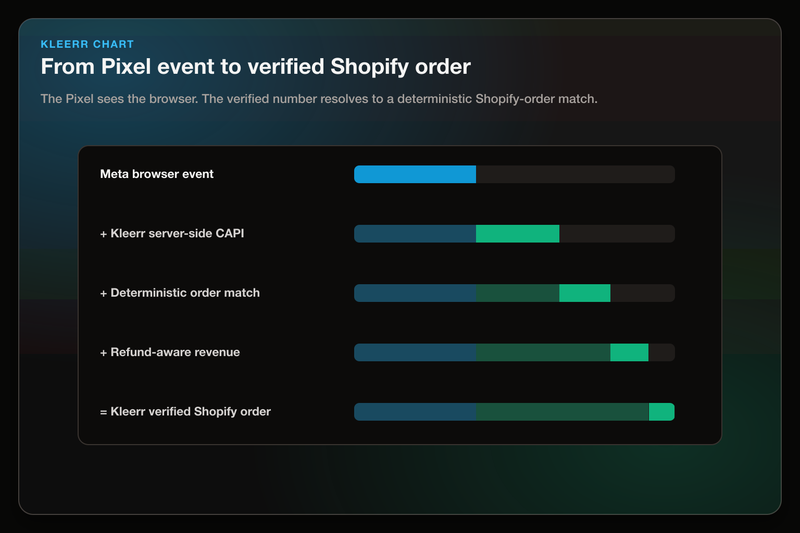
For Kleerr, the difference is bigger than "we send a server event too." A browser pixel mostly sees the browser and session. Kleerr's server-side event layer carries cleaner purchase signal, then identity matching can add more buyer context across sessions and devices for audiences and automations.
That extra context should not be confused with the proof layer. Activation can get richer, but the verified revenue read still resolves against deterministic Shopify orders instead of treating modeled signal as truth.
How are Pixel, CAPI, and deduplication different?
Pixel, CAPI, and deduplication solve different jobs in the tracking stack. Pixel captures browser-side actions. CAPI sends server-side events. Deduplication prevents the same customer action from being counted twice. None of those steps proves whether Meta, Google, email, SMS, or another channel deserves credit for the order.
| Term | What it does | What it does not prove |
|---|---|---|
| Pixel | Sends browser events from the shopper's device | That every event fired or matched cleanly |
| CAPI | Sends server events from a backend or partner connection | That the event created incremental revenue |
| Deduplication | Tells Meta two events describe the same action | That Meta ROAS equals Shopify truth |
| Verified revenue audit | Compares platform claims against real orders | That every future budget move caused lift |
This distinction matters because teams often stop too early.
A clean dedup setup can make Meta's event stream healthier. It does not answer the bigger budget question: did Meta create the order, or did it claim an order another channel would have won anyway?
What is the rate of Pixel events covered by Conversions API?
The rate of Pixel events covered by Conversions API is a Meta event-health signal. It measures how many browser Pixel events also have a corresponding server-side event. It helps you see whether CAPI is covering important browser activity, but it does not prove that events are deduplicated correctly or that Meta deserves the revenue credit.
Read coverage and deduplication as two separate checks:
| Check | Question it answers | What it does not answer |
|---|---|---|
| CAPI coverage rate | Is the server sending versions of browser events? | Are duplicate events being counted once? |
| Deduplication | Do matching browser and server events share an identity? | Did the ad cause the order? |
| Shopify reconciliation | Do the events map to completed store orders? | Was the order incremental? |
| Verified attribution | Which platform claims match the defined order evidence? | What every future dollar will produce? |
A low coverage rate can mean CAPI is missing key events, event names do not match, the server connection is delayed, or only part of the ecommerce funnel is mapped. A high rate means server coverage is present. It is not a full pass.
High coverage can still be wrong when:
- browser and server events use different `event_id` values;
- the same event ID is reused across orders;
- purchase values differ between Pixel, CAPI, and Shopify;
- a thank-you page reload fires another browser purchase;
- the server sends checkout or authorization events as completed revenue;
- refunds and cancellations remain in reported revenue.
The server can also send more events than the Pixel because browser events are blocked or dropped. That may be legitimate signal recovery. It makes event-ID hygiene and order reconciliation more important, because extra server volume without clean matching can turn recovery into duplicate counting.
Which events should CAPI cover first?
Prioritize the events that affect optimization and money decisions rather than chasing the largest coverage percentage.
| Priority | Event | Why it matters |
|---|---|---|
| 1 | Purchase | Directly affects revenue, ROAS, and CAC |
| 2 | InitiateCheckout | Strong purchase-intent signal |
| 3 | AddToCart | Useful mid-funnel signal for optimization and audiences |
| 4 | Lead or signup | Supports owned-channel follow-up |
| 5 | ViewContent | Adds context, but is weaker than a revenue event |
A store can have excellent page-view coverage and a broken purchase setup. Start by running one test order and proving that it creates one browser purchase, one server purchase, one shared event ID, and one completed Shopify order.
How should Shopify teams use the coverage rate?
Use it as a troubleshooting input, not a budget rule. Low purchase coverage means fix event delivery. High coverage with poor deduplication means fix IDs and triggers. High coverage with clean deduplication means move to the next check: compare Meta's claims with Shopify orders and other channel claims.
Never cut or scale spend only because the coverage score moved. The score tells you whether signal is arriving. It does not tell you what revenue would disappear if you stopped paying for the ad.
How do you set up pixel vs CAPI deduplication correctly?
Set up deduplication by generating one unique event ID for each conversion, then sending that same ID through the browser Pixel event and the matching CAPI event. The event name should also match exactly. For example, a purchase should be `Purchase` on both sides, not two near-match names.
Use this process:
- Choose the events that need deduplication. Start with high-value events like `Purchase`, `InitiateCheckout`, and `Lead`.
- Generate one unique `event_id` per action. A purchase should have one purchase event ID. Do not reuse the same ID across different orders.
- Send the same ID from browser and server. The Pixel event and CAPI event should carry the same `event_id` when they describe the same customer action.
- Keep the event name identical. `Purchase` and `purchase` are not the same clean setup. Match the naming exactly.
- Send useful customer match parameters. Use server-side customer fields where consent and policy allow. These improve match quality, but they do not replace the dedup key.
- Test with Meta's tools. Use Meta's testing and diagnostics to confirm the browser and server events are received and deduplicated.
- Compare against Shopify orders. A Meta setup can pass event QA and still disagree with store revenue. Treat platform reporting as one input, not the final ledger.
What mistakes break pixel vs CAPI deduplication?
Deduplication breaks when Meta cannot tell that the browser event and server event describe the same action. The common causes are different event IDs, mismatched event names, reused IDs, duplicate browser fires, and server events that trigger from the wrong business action instead of the completed order.
| Mistake | What happens | How to fix it |
|---|---|---|
| Browser and server IDs differ | Meta may count two events | Pass the same event_id to both |
| Event names differ | Deduplication can fail | Match names exactly |
| ID gets reused | Real events may be collapsed | Generate one ID per action |
| Pixel fires twice | Meta receives extra browser events | QA tags, apps, and GTM triggers |
| CAPI sends the wrong trigger | Server event does not match the real action | Tie purchase events to completed orders |
| Thank-you page reload creates a new event | One order can look like multiple actions | Anchor purchase IDs to the order, not the page load |
For Shopify brands, the highest-risk event is `Purchase`.
That is the event tied to ROAS, CAC, and budget decisions. If purchase events are duplicated, missing, or matched to the wrong order, the downstream reporting can look precise while still pointing the team in the wrong direction.
Not sure how much of your purchase signal is actually reaching Meta? Run the free signal-loss checker to see where events drop before they count.
What should Shopify teams check after deduplication is working?
After deduplication is working, Shopify teams should check whether platform-reported performance matches verified store revenue. Deduplication reduces duplicate event counting inside Meta, but it does not settle cross-channel attribution, refund handling, new versus repeat customer splits, or budget allocation across paid and owned channels.
This is where event hygiene turns into measurement.
In one Shopify audit, Kleerr found one platform claimed a 5.4x ROAS, while verified revenue showed 1.2x. That is one audit, not a category benchmark, but it shows why a clean event setup still needs a verified revenue check.
A Shopify team should ask:
| Question | Why it matters |
|---|---|
| Did Meta count the right number of purchases? | Event QA |
| Did Meta claim revenue Shopify can verify? | Revenue QA |
| Did the order come from a new or returning customer? | CAC accuracy |
| Did another channel also claim the order? | Budget allocation |
| Did refunds change the revenue value? | Margin reality |
Deduplication is necessary. It is not the whole measurement layer.
If your Pixel and CAPI setup is clean but platform ROAS still does not match Shopify, compare self-reported performance against verified orders before changing spend. Kleerr shows how ecommerce teams use that verified read to separate event delivery from revenue truth on its platform page.
What does pixel vs CAPI deduplication Reddit advice get right?
Pixel vs CAPI deduplication Reddit threads can be useful for spotting practical symptoms: missing event IDs, mismatched names, duplicate purchase fires, and broken tag triggers. They should not be treated as the source of truth for Meta's current implementation details or your account's actual revenue problem.
The strongest advice is simple: do not guess.
If someone says, "CAPI is double-counting my purchases," check the event payload before changing budgets. Look for the same purchase event arriving twice with different IDs, different names, or multiple tag triggers.
Reddit can help you spot patterns. Meta's docs and your own event logs should decide the fix.
A good workflow is:
- Read the thread for symptoms.
- Validate the exact issue in Meta testing tools.
- Inspect the browser event payload.
- Inspect the server event payload.
- Compare the purchase count to Shopify.
- Fix the event source that is wrong.
Do not change attribution windows, budgets, or campaign structure because a thread sounds similar. First prove the same failure exists in your own account.
How should you compare pixel vs CAPI deduplication vs Meta reporting?
Pixel vs CAPI deduplication vs Meta reporting is the difference between event hygiene and business truth. Deduplication helps Meta avoid double-counting duplicate events. Meta reporting is still a platform view, so Shopify teams should compare it against verified store revenue before moving budget.
Think of it in layers:
| Layer | Question it answers | Example |
|---|---|---|
| Deduplication | Did Meta count this event once? | One purchase, not two |
| Event matching | Can Meta connect the event to a user? | Better match quality |
| Platform reporting | What does Meta claim from its view? | Reported ROAS |
| Verified revenue | What actually happened in Shopify? | Completed order revenue |
| Budget decision | Where should the next dollar go? | Scale, hold, or cut |
The dangerous move is treating layer three as layer five.
A Meta report can be useful and still incomplete. Meta sees its own ads well. It does not have a neutral view of every owned, paid, direct, and organic touch that led to the order.
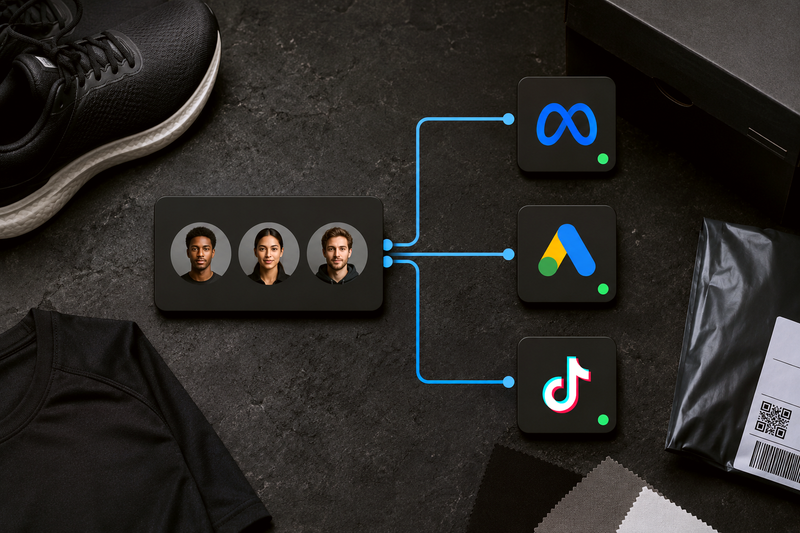
This is why deduped reporting and signal activation should stay separate. Kleerr's platform overview frames that split as verified signals in, attribution across channels, and events or audiences put to work. The reporting layer still needs to stay deduped against verified revenue, not treated as the same thing as ad-platform signal delivery.
What is the simple QA checklist for Pixel and CAPI deduplication?
A simple Pixel and CAPI deduplication checklist should confirm that one customer action creates one browser event, one server event, one shared event ID, and one completed Shopify order. If those four items do not line up, reporting can drift before anyone notices.
Use this checklist before trusting ROAS:
- [ ] The purchase event fires once in the browser.
- [ ] The matching server event fires once from the backend or partner connection.
- [ ] Browser and server events use the same `event_name`.
- [ ] Browser and server events use the same `event_id`.
- [ ] The `event_id` is unique to that customer action.
- [ ] The event value matches the completed order value you intend to send.
- [ ] Test orders match the number of Meta purchase events.
- [ ] Shopify order count remains the source of truth for completed purchases.
- [ ] Refunds, cancellations, and repeat buyers are handled in your reporting layer.
- [ ] Budget decisions are based on verified revenue, not event delivery alone.
Do this after major theme changes, checkout changes, tracking app changes, server-side tag changes, or Meta integration changes.
Small tracking changes can create large reporting changes.
FAQ: Pixel vs CAPI deduplication
Pixel vs CAPI deduplication is a technical event-counting control, not a full attribution strategy. The fastest way to understand it is to separate event delivery, event matching, deduplication, and verified revenue reporting into different checks before trusting any platform-reported ROAS number.
Does CAPI replace the Pixel?
No. Many setups use both. Pixel captures browser-side events, while CAPI sends server-side events. Running both can improve event coverage, but it also creates the need for deduplication when both send the same action.
Is `event_id` the same as `fbp` or `fbc`?
No. `event_id` is the deduplication key for matching browser and server versions of the same event. `fbp` and `fbc` are identifiers used for matching and attribution context. They solve a different problem.
Why does Meta still not match Shopify after deduplication is fixed?
Deduplication only helps Meta avoid counting the same event twice. Shopify is your order system. Meta reporting still reflects Meta's platform view, attribution settings, and available signal. The numbers can differ even when event deduplication works.
Should every event use Pixel and CAPI?
Start with events that matter for optimization and reporting, especially purchase events. Sending low-value or poorly defined events from both browser and server can create noise. Clean event design matters more than volume.
What is the biggest warning sign of broken deduplication?
The clearest warning sign is a purchase count that is higher in Meta than completed Shopify orders for the same tested path. That does not prove deduplication is the only issue, but it is a strong reason to inspect event IDs and triggers.
Is pixel vs CAPI deduplication enough to trust ROAS?
No. It is enough to reduce duplicate event counting inside Meta. To trust ROAS, compare platform-claimed revenue against verified ecommerce revenue, then decide whether the channel deserves more budget.
Is a 100% CAPI coverage rate always good?
No. High coverage can still hide different event IDs, duplicate triggers, mismatched values, or server events that do not map to completed orders. Coverage and deduplication must both pass before revenue reconciliation begins.
Can CAPI send more events than the Pixel?
Yes. Browser events can be blocked or dropped while the server still records the action. That can be legitimate signal recovery, but the additional server events still need unique IDs, correct business triggers, and a clean match to Shopify orders.
Ready to verify what your ad platforms claim?
If your Pixel and CAPI setup is clean but your budget decisions still feel unclear, the next step is revenue verification. Compare platform-reported performance against real Shopify orders, then decide what to scale, hold, or cut based on the verified read.
For Shopify DTC teams, Kleerr can help audit the gap between self-reported platform performance and verified store revenue, then turn that gap into clearer budget and audience decisions. See how Kleerr works for ecommerce teams.
About the author
Daniel Pisterzi owns the Kleerr content brief and leads Kleerr's marketing analytics positioning. He writes from Kleerr's work auditing Shopify ad data, comparing platform-reported performance to verified store revenue, and translating those gaps into clearer budget and audience decisions for operators.